


When darkness comes, who will bear witness?
Updated: May 19

The Inanna myth describes those times when our darkness becomes so intense we arrive in an unfamilar place. When we can no longer rely on the stability of what we have known or trusted and the ground beneath us is no longer solid.
This ancient Sumerian myth about the goddess Inanna was the first blueprint for understanding how psychological, physical or spiritual descent can be so terrifying and yet it is the only way to transform.
I experienced my descent age forty three. I lost my zest for life, interest in my career, relationships and my physical and psychological health. Of course I clung on for dear life masking my descent to the outside world until there was nothing more to grasp. Unltimately resistance was futile, I had to let go of everything I had built. That's when I entered free fall.
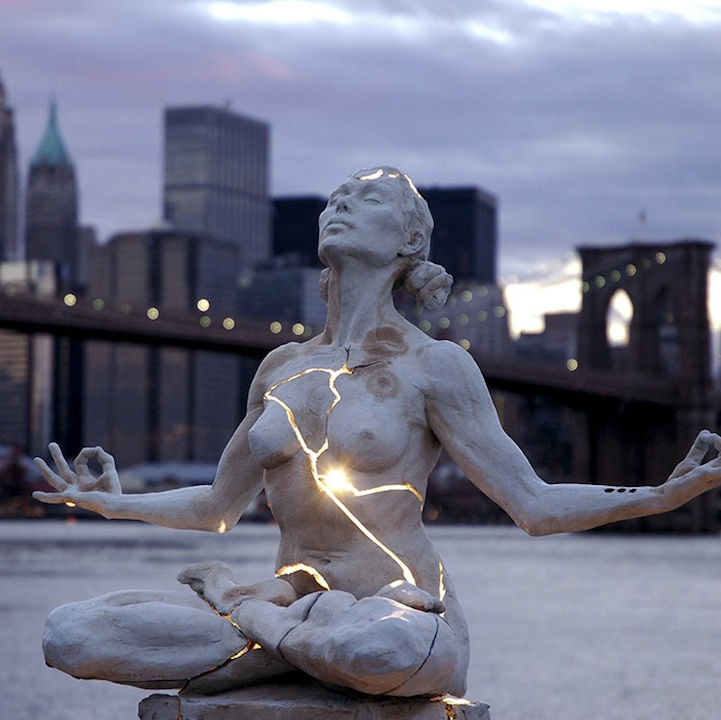
The myth of Inanna reminds us that when the ground cracks open like this and we look around for something to hold onto, we must instead let go. The longer we fight, the more suffering we will endure. Trapped in the past or fearful of the future.
As the myth goes, Inanna passes through a series of gates at which she must surrender a different part of her identity. The myth makes clear that she has no choice in this, she is stripped against her will at each gate, despite her protests.
When she reaches her destination, she is killed by her own sister, Ereshkigal. Stripped completely naked and powerless, her sister casts her the "eye of death" striking Inanna dead. She hangs her on a meat hook and allows her body to rot.
This myth reminds us that complete dissolution of our identity is the only outcome when we experience profound change, for example severe trauma, serious physical or psychological illness, addiction or dibilitating grief. These are not your everyday uncomfortable events.
This myth reminds us that we cannot come through these transformative experiences by willpower, insight or even action alone. It offers the importance of being witnessed.
After everything she has endured, Inanna is incapable of going home by herself. She is rescued by non-human beings the kurgarra and galatur who arrive without agenda and bear witness to Ereshkigal in pain. They simply reflect back Ereshkigal's suffering without any judgement which astonishes her given all of the years of torment and captivity. She releases Inanna.
Ninshubar, Inanna's devoted maidservant is her witness. She waits at the surface holding the grief of not-knowing and from that grief she never abandons hope.
The myth teaches us that when we allow the darkest parts of ourselves, those we have ignored, banished or exiled to be witnessed, our ascent begins.
The myth is actually quite sparse on ascent itself. Inanna doesn't emerge healed, restored and glowing. She comes back accompanied by demons and has to sacrifice her own husband, Dumuzi, to take her place in the underworld. The ascent costs. It is not a return to what was, to the comfortable existence she once had. This is what distinguishes the Inanna myth from idealised narratives.
The most important message in this myth is that the witness is essential not just to surviving the descent, but to find the way back. We cannot return while we are still in the dark. We need someone on our side, to hold out with hope.


Comments