


Menopause as Initation: Your Second Act

After decades of conditioning becoming the capable one, the caregiver, the professional, the good girl, the perfectionist, the outcast, something shifts...the life you worked so hard to build begins to feel like someone else's. You can't explain it. It's a life that no longer fits comfortably.
Carl Jung called this enantiodromia, the moment when what we’ve suppressed for too long turns and demands to be heard. It shows up as inner resistance and a sense that the life you’ve built no longer fits who you are. It reveals itself in dreams, what we pay attention to and what no longer feels like home. It arrives as crushing grief for our unlived lives, deep-seated rage for the years of self-abandonment and a hunger for greater aliveness.
This is not a fluke of nature, it happens to most women across time and culture. Traditionally it's been an initiation to let go of the roles, expections and responsibilities we have held and return to our deepest life force.
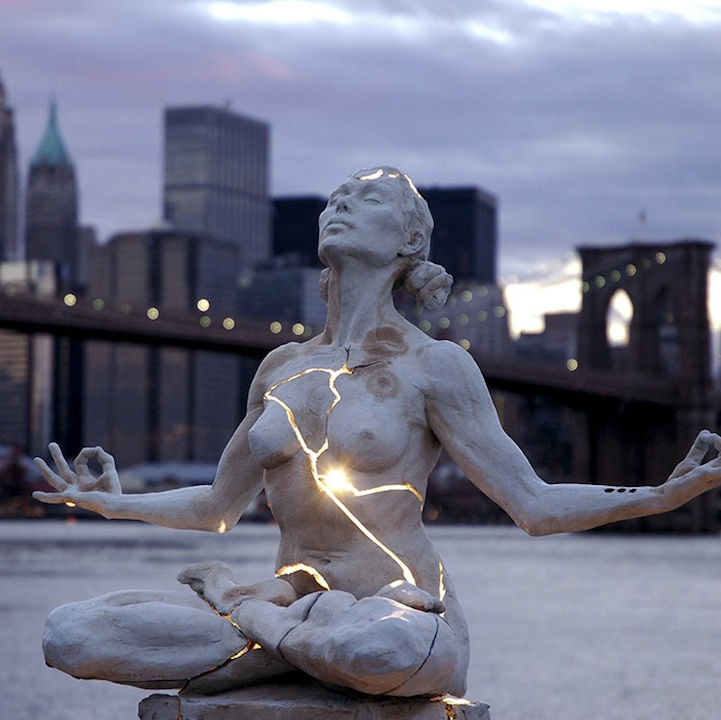
In her book Addiction to Perfection Marion Woodman the great mythopoeic author, Jungian psychologist and feminist discussed how menopause can be a spiritual awakening. Many of us have sacrificed ourselves to please the world, becoming the perfect version of a woman. Marion calls this 'soul murder,' living in our heads, disassociated from our body. Enantiodromia at midlife is a natural process that brings us back to our body. For many of us it's the symptoms of menopause that bring us back home.
Woodman suggests menopause is a soul awakening. Channels open so that what has been hidden away in our unconscious can be expressed. As Woodman puts it, 'This is the time for pleasing herself.' It's our next chapter or second act.
Looking back Woodmans take on menopause resonates. The second half of my life has been about embracing those parts of me that had been left in the dark. Welcoming my whole self and my deepest lifeforce.
The first half of my life my energy was very much directed outward. Acquiring knowledge, leading, teaching, facilitating, building a life based on success and achievement in the hope that happiness would follow.
At midlife particularly with the onset of menopause so much of the cost and reality of living this way was unmasked. Neurodivergence, chronic autoimmune conditions, single motherhood amongst other things were revealed. I was literally forced to my knees.
For a time I clung on to what I knew and trusted. I did not want to give up my life despite feeling unhappy. But then something shifted. My energy changed.
I began to relish time alone. People irritated me. I no longer wanted to perform. I didn't have the energy. I wanted to be me.
I began taking solitary walks in nature, foraging, swimming alone in the sea. I chose to go to bed early and rose before the rest of the world. I wanted to create for the first time in almost forty years. Then I made the decision to relocate to the Western highlands of Scotland, to live beside the mountains. Solitude took hold of me. I spent the days with the company of my dog, Elvis. I preferred to work on line. And I began to paint, draw and write.
What was once exiled in me demanded to become a part of my daily life.
For decades I had repressed my unconscious desires and longings and dared not look out of fear I'd made the wrong choices in life. And yes grief came too, for choosing a path that meant abandoning my creative expression.
If you are in this place right now, life feels that it no longer fits, this is not a an ending. It is a becoming. The parts of you that were exiled are not gone. They are waiting for this invitation. And the question you need to ask is not about whether you are ready. The question is whether you are willing to embrace the whole of you and your deepest life force?
Quotes to inspire your second act.
"The first half of life is learning to be an adult; the second half is learning to be a child." Picasso
"I believe the second half of one's life is meant to be better than the first half. The first half is finding out how you do it. And the second half is enjoying it." Frances Lear
“The first half of life is devoted to forming a healthy ego, the second half is going inward and letting go of it.” Carl Jung


Comments